

24
2026
-
03
How solar-powered misting pavilions address the challenge of cooling down scenic areas during summer heatwaves
Author:
Guangzhou AoGong
As the cultural and tourism industry experiences rapid growth, the supporting infrastructure of outdoor public spaces is confronting multiple challenges. While traditional pavilions can provide shade, they fail to effectively lower ambient temperatures during summer heat, leading to significant discomfort for visitors. Moreover, scenic areas generally grapple with the homogenization of ancillary facilities, lacking rest stops that seamlessly blend practicality with aesthetic appeal.

I. Technological Breakthroughs in Solar-Powered Gazebos
Addressing the aforementioned industry challenges, Guangzhou Aogong Spray Equipment Co., Ltd. has introduced a solar‑powered pavilion—also known as a scenic‑area solar spray pavilion—that integrates photovoltaic technology with high‑pressure fine‑mist spraying to deliver a multifunctional solution for shading, cooling, landscape enhancement, and environmental protection. By seamlessly blending clean energy with human‑centered recreational needs, it offers a comprehensive outdoor cooling system tailored to the cultural‑tourism sector.
The product’s power supply system combines high-efficiency solar panels with an energy storage unit, capturing and storing solar energy during the day to ensure continuous operation of lighting and misting systems even on cloudy or rainy days and at night. This design fully addresses the electricity needs of rest areas and facilities in remote locations—such as mountain forests and historic towns—where wiring is impractical, enabling zero‑cost operation and meeting the standards for ecological protection zones and green tourism development.
II. The Dual Benefits of Cooling and Air Purification
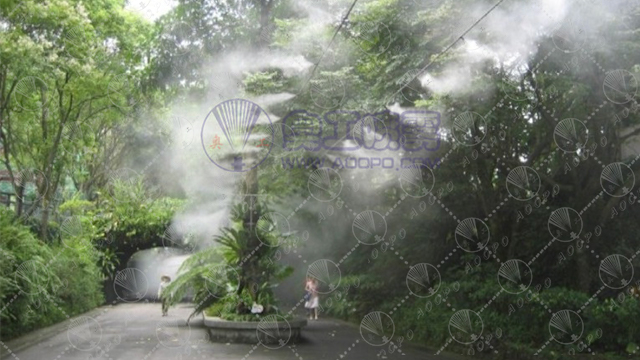
In terms of cooling performance, the solar-powered pavilion demonstrates a clear advantage thanks to its fine-mist cooling system. Concealed, embedded misting nozzles deliver a uniform, micron‑scale fine mist with no water droplets left behind, rapidly lowering temperatures through evaporation without wetting visitors’ clothing. Measured data show that the system can quickly reduce local temperatures by 3–5°C, creating a cool, comfortable microclimate at trail junctions and viewing platforms and effectively mitigating the risk of heat‑related illnesses.
Even more noteworthy is its air-purification capability. The atomization process generates a large number of negative oxygen ions and captures airborne particulates, achieving a dust‑removal efficiency of over 80%. This helps alleviate issues related to dust and pollen allergens in scenic areas, creating a “natural oxygen bar”–level visitor experience and enhancing the quality of visitors’ breathing.
III. Scene Adaptation and Aesthetic Enhancement
The solar-powered misting pavilion from Aogong offers customizable designs to suit a variety of styles. With options ranging from classical Chinese and modern minimalist to European and pastoral, it seamlessly integrates into diverse park themes, enhancing both the space’s aesthetic appeal and its visual allure. The fine water mist blends harmoniously with architecture and natural landscapes, evoking a dreamy, cloud‑sea ambiance and creating a popular photo‑op spot that boosts the attraction’s social‑media presence.
At the intelligent management level, the product is equipped with an intelligent control module that features light‑activated start/stop, water‑shortage protection, and anti‑clogging design, reducing the frequency of manual maintenance and enabling automated operation. This hardware delivery model supports deep customization of style and functionality—such as adding charging ports—tailored to the unique characteristics of each scenic area.
IV. Application Scenarios and Actual Outcomes
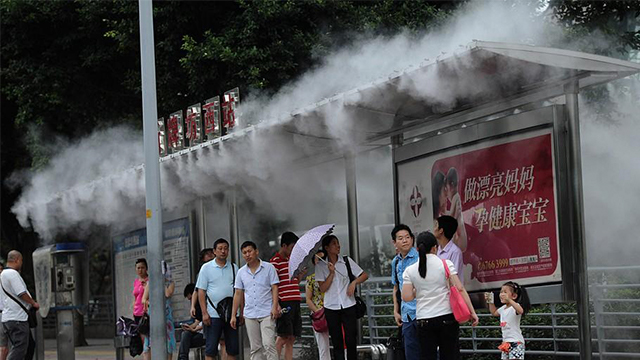
The solar‑powered pavilion business serves a wide range of outdoor public spaces, including scenic areas, urban plazas, cultural parks, and commercial squares. In the context of cultural and tourism destinations, these facilities can boost scores for ancillary services in A‑level scenic‑spot assessments, thereby strengthening brand competitiveness. In urban public spaces, the installation of eco‑friendly rest stops can enhance the commercial potential of surrounding areas.
From the perspective of practical application, the haptic‑based optimization has achieved localized temperature reductions of 3–5°C, while in terms of traffic conversion, by extending visitors’ dwell time, it has indirectly boosted secondary‑consumption revenues from dining, cultural‑creative products, and other offerings. This design approach, which integrates functionality with economic benefits, has created new avenues for value growth in scenic‑area operations.
V. The Strategic Significance of Green and Low-Carbon Development
Against the backdrop of the “dual carbon” goals, the zero‑carbon and low‑carbon operational model of solar‑powered pavilions holds significant demonstrative value. By harnessing photovoltaic power for self‑sufficiency and eliminating the need for external grid connections, this approach aligns with the cultural and tourism sector’s strategic shift toward green, low‑carbon development. As a systematic outdoor cooling solution powered by clean energy, it not only addresses key pain points in target scenarios—such as visitor fatigue during heatwaves, air‑quality concerns, and the lack of power supply in remote areas—but also offers the industry a viable technological pathway for sustainable growth.
Overall, the solar-powered pavilion launched by Aogong Spray has established a differentiated competitive edge across multiple dimensions—cooling efficiency, energy utilization, air purification, and landscape enhancement—through integrated technological innovation. It offers a solution that combines practicality with environmental sustainability, paving the way for the upgrading of ancillary facilities in outdoor public spaces.
Pavilion,Solar-powered pavilion
Related Information

undefined

Business Contact
WeChat Official Account
TikTok
Headline
Xiaohongshu
Kuaishou
Bilibili
Contact Us
Business Phone:+86 20-86877326
+86 137-1097-1413(WeChat ID is the same)
Email:aoopo11@163.com
Address: Park No. 23, Lianglong West Street, Huashan Town, Huadu District, Guangzhou City, Guangdong Province


